XenD106L Ushers in a New Era of Battery‑Powered “Passive Sensing” for mmWave Technology
Battery‑driven life presence detection liberates mmWave sensing from the constraints of mains power.
As smart devices demand longer battery life and easier installation, the challenge of powering a sensor without a mains connection – while still detecting both moving and stationary people – has become a key barrier. This has been a long‑standing problem for battery‑operated devices like occupancy sensors, smart doorbells and locks. It also marks a new step for mmWave sensing to achieve true “wire‑free” operation. ICLEGEND’s XenD106L battery‑powered life‑presence mmWave sensor solves this with an ultra‑low‑power, compact design. By combining life‑presence detection with battery power, it opens a new chapter in “passive sensing” for smart interaction.
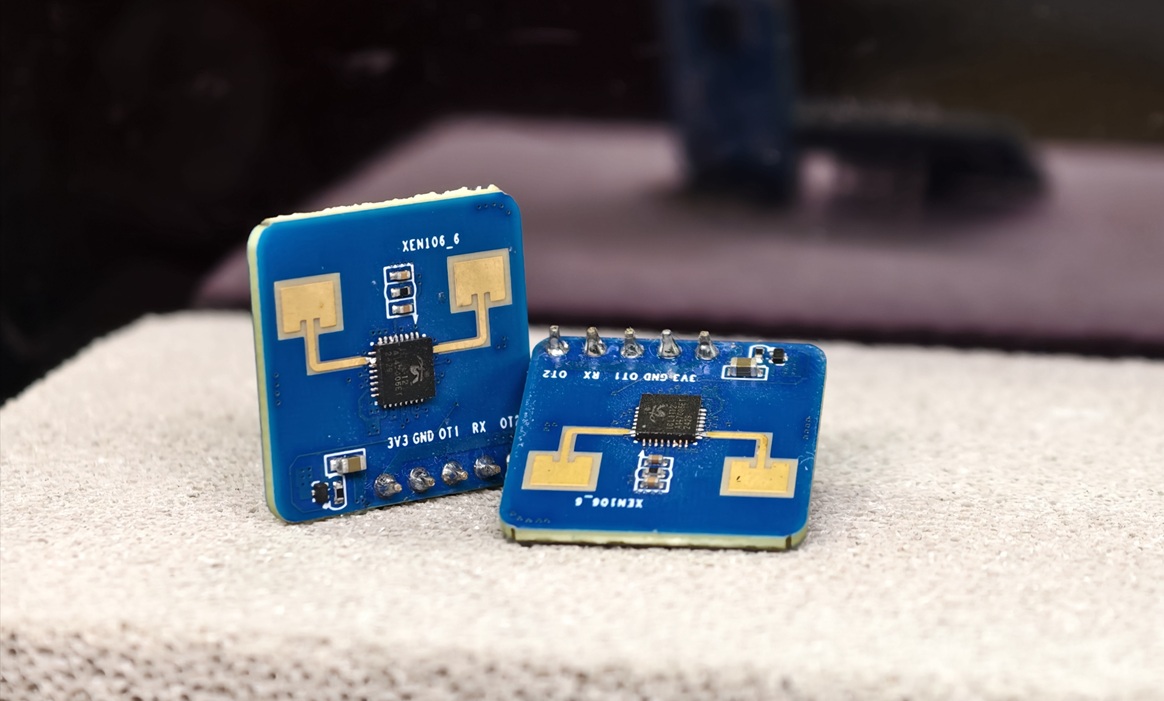
Technology Foundation: µA‑Level Power and Fully Integrated SoC
The XenD106L uses ICLEGEND’s ICL1112 SoC – a 24GHz 1T1R mmWave sensor chip that runs on µA‑level current. It cuts total system power from tens of milliamps down to just 60 µA, with a typical operating current of about 50 µA – a thousand‑fold reduction. With a coin cell or battery pack, it delivers year‑long battery life from a single installation, making truly untethered sensing possible. The XenD106L is a milestone product that moves mmWave from the “wired era” to the “battery‑powered era”.
True Life‑Presence Detection: No Missed Detection in Stillness or Sleep
Conventional low‑power sensors often rely only on motion, leading to false triggers when people stay still. The XenD106L reliably detects if a person is present – even when completely still, sitting or asleep. It offers a stationary detection range of up to 4 metres and a motion detection range of 6 metres, ensuring that “still present” and “already left” are never confused. This makes it ideal for bedrooms, meeting rooms, elderly care, and other scenarios where reliable presence detection is critical.
250 ms Real‑Time Response: Equally Good for Motion and Stillness
Besides detecting presence, it is also important to distinguish between motion and stillness in real time. When a person changes from still to moving – which can happen in a second or less – the sensor must respond quickly. The XenD106L achieves a trigger delay of less than 250 ms. Whether someone walks past or lingers, the sensor captures the change rapidly and triggers the device, avoiding delays or false alarms. Combined with high‑precision distance measurement, it delivers fast response, motion/stillness detection, and real‑time positioning.
Ready to Use, Easy to Deploy
The XenD106L comes with a simple PC tool for demonstration and testing. Through this software, users can set detection range, reporting frequency, and trigger thresholds. It also supports automatic threshold generation – no programming needed to adapt to different mounting environments, such as walls, ceilings, or spaces with obstructions. Settings are saved permanently and not lost on power‑down, ensuring true “stick‑and‑use” simplicity. It also supports dual‑protocol output – a lightweight protocol (status + distance only) that reduces power consumption for wireless networks, and a standard protocol (including energy values) that provides full data for deeper analysis.
Cost‑Optimised Design for Mass Production
The XenD106L reference board measures just 20×20 mm and uses standard FR‑4 PCB material. Importantly, its dimensions are the same as ICLEGEND’s existing XenD human‑presence product line, allowing existing customers to migrate without changing their production lines – significantly reducing switch‑over costs. The fully integrated CMOS architecture based on the ICL1112 SoC needs few external components, further improving the cost‑competitiveness of end products.
Broad Scenario Coverage: Unlocking Sensing Potential in Battery‑Powered Devices
The XenD106L is more than a sensor – it is a key enabler for battery‑powered smart devices to move from “passive control” to “active awareness”.
Smart Doorbells and Locks: It monitors whether someone is lingering or loitering in the detection area, not just relying on motion triggers. Even when a person stands still at the door for a long time, the sensor reliably detects them, providing continuous monitoring and avoiding false alarms or missed events. Its low power ensures that doorbells and locks can operate reliably on battery for long periods, offering round‑the‑clock security.
Standalone Presence Sensors: With no need for wiring or a power socket, a coin cell battery provides long‑term operation. This allows standalone presence sensors to be truly “placed anywhere” – flexible deployment in any location, especially useful for retrofitting existing spaces or temporary installations where power is not available.
Smart Appliances: The sensor upgrades simple on‑off appliances from “passive response” to “active awareness”. A smart speaker can activate when someone is near and go into standby after they leave; a smart lamp provides continuous lighting only while occupied, then dims gradually after departure, saving energy. The µA‑level power ensures that these intelligent behaviours do not drain the battery, making “cord‑free” living a reality.
The XenD106L is now fully available for retail purchase, supported by a complete set of development resources, including a visual configuration tool, product datasheets, and user manuals – all designed to help developers and customers speed up time‑to‑market.
The XenD106L is now available for retail; you can view and order it at mall.iclegend.com.